
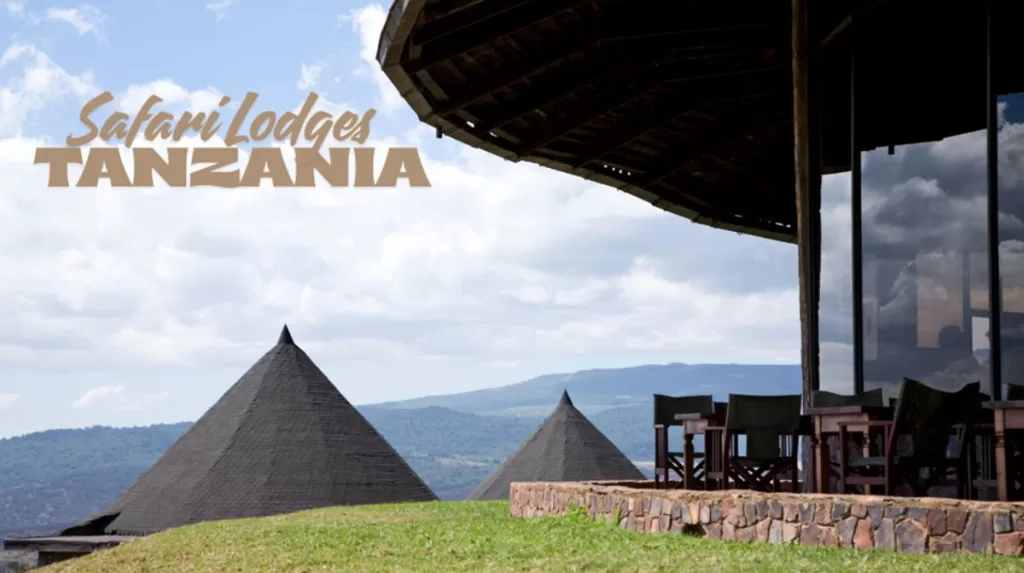
Choosing where to stay
There is no single best safari lodge in Tanzania. There is a right camp for a particular route, month and traveller.
A beautiful lodge in the wrong part of the Serengeti can mean hours of unnecessary driving. A famous name may be less useful than a smaller camp close to the wildlife you have come to see. We begin with location, then look at comfort, character and cost.
The names can be confusing
Lodge, tented camp or mobile camp?
In Tanzania, “camp” does not necessarily mean rough camping. Many tented camps have proper beds, private bathrooms, hot showers, good food and a veranda. What changes is the structure, the setting and how closely you hear and feel the bush around you.
Permanent lodge
Solid buildings, usually with larger shared areas and often a pool. These can work well for families, longer stays and travellers who prefer more separation from the sounds of the bush.
Permanent tented camp
Canvas rooms on a fixed site, commonly with an en-suite bathroom and comfortable furnishings. This is often the best balance of atmosphere and comfort.
Seasonal or mobile camp
A camp that moves between established sites, particularly in the Serengeti ecosystem. Its strength is location; facilities may be simpler because everything must be moved.
Private house or small exclusive camp
Useful for extended families or friends wanting private meals and a more flexible daily routine. Check exactly which vehicle, guide and staff are included.


Location before luxury
Choose the camp with the route—not afterwards
A sensible northern Tanzania safari normally moves in one direction through the parks rather than zig-zagging between attractive properties. We look at road time, park gates, airstrips and where the first game drive begins. A camp just outside a park can offer excellent value, but only when its position suits the plan.
Tarangire
Inside-park camps give you an early start among the baobabs. Properties outside the gates can be useful on an arrival or departure day. In the dry season, the north and central river areas are often particularly important.
Ngorongoro and the highlands
Crater-rim lodges reduce the drive to the descent road and have remarkable views. Highlands properties farther away may offer warmer service, gardens and better value, but the next morning starts earlier.
Lake Manyara and the Rift Valley
Manyara can fit neatly between Arusha, Tarangire and Ngorongoro. We choose between the escarpment, the park area and nearby towns according to the next day’s route rather than treating every “Manyara” address as equal.
Ruaha and Nyerere
In southern Tanzania, access, activity choices and the length of a stay matter greatly. Small camps can provide excellent guiding; boat trips in Nyerere and walking or night activities depend on location and current park permissions.
The Serengeti needs special attention
A camp called “Serengeti” may be a day’s drive from another
The Serengeti National Park is vast, and the migration does not follow a fixed calendar. Rainfall alters the movement each year. The guide below is a starting point, not a promise of a river crossing or a particular herd outside your tent.
| Area | When it can make sense | What to consider |
|---|---|---|
| Central Serengeti | A strong year-round base with resident wildlife and routes in several directions. | It is popular and can be busy. It also combines well with a second camp when the seasonal movement is farther north or south. |
| Southern plains and Ndutu | Often most relevant during the green season and calving period, broadly from December into March. | The herds move with the rains, and some camps are seasonal. The precise site and access rules should be checked for your dates. |
| Western corridor | Often considered as herds move west and north, commonly around May to July. | River crossings here are different from the better-known Mara River crossings and remain impossible to schedule precisely. |
| Northern Serengeti | Often chosen from July into October for the Mara River area and good resident wildlife. | Crossings cannot be guaranteed. A good stay allows enough time and does not spend every hour chasing one spectacle. |
Classic, luxury and beyond
What are you really paying for?
A higher price can buy a better position, a smaller camp, a larger room, more private space, stronger food and service, or expensive access by light aircraft. It does not automatically buy better wildlife sightings. Nor does a modest camp automatically mean a poor safari.
Our Classic safaris favour well-run camps and lodges that put the route first. Our Tanzania luxury safaris add more space, privacy, service and carefully chosen locations. On either style, the guide, vehicle and shape of the itinerary remain central.
We do not publish a fixed lodge-price table because rates change by season, room type, group size, park fees and availability. A current itemised proposal is more honest and much more useful.

How we narrow the choice
Details that change the recommendation
Two people travelling on the same dates may need completely different camps. One may want canvas, night sounds and a small communal table; another needs solid walls, adjoining rooms and a swimming pool between drives.
- Children’s ages and room arrangement
- Mobility and walking distances in camp
- Dietary requirements
- Pool, air-conditioning or reliable charging
- Private dining or a sociable camp
- Photography and time out on game drives
- Sensitivity to steps, altitude or night sounds
- Whether a light-aircraft flight is worthwhile
Before we quote
We check the details that photographs cannot show
Camp ownership, managers, standards and access can change. We check current availability and how a property fits the exact route before including it in a proposal. When there are two sensible choices, we explain the difference rather than simply inserting the more expensive one.
We also look at what is included. Full board may not include every drink or activity. A camp’s own shared drives are not the same as having an EASTCO private vehicle and guide. Airstrip transfers, laundry, child rates and single-room charges can all alter the comparison.
Continue planning
Match the lodge to the safari
Frequently asked questions
Safari lodges in Tanzania
Is it better to stay inside or outside a national park?
Neither is always better. Inside-park accommodation can reduce gate delays and give an earlier start. A well-positioned property outside may offer more space or value. The decision should be made park by park and day by day.
Are tented camps safe?
Established camps have clear safety procedures and staff escort guests after dark. Wild animals may pass through unfenced camps, so guests must follow the briefing and should never walk alone at night.
Do safari lodges have electricity, Wi-Fi and hot water?
Most camps we use provide charging and hot water, but the hours and systems vary. Wi-Fi may be strongest in a common area and can be interrupted in remote country. Tell us if power for medical equipment or reliable connectivity is essential.
How early should I book?
Family rooms, small high-demand camps, Christmas and the busiest Serengeti months can fill well ahead. Earlier gives more choice, but good alternatives are often possible closer to departure when the route or dates are flexible.
Can a camp guarantee that I will see the migration?
No responsible camp or operator can guarantee a crossing or exact herd location. We use the normal seasonal pattern, current conditions and enough time in the right area to improve the chances.
Can lodges handle dietary or mobility requirements?
Many can, with advance notice, but remote camps have different kitchens, paths, steps and vehicle access. Give us the practical details early so we can check each property rather than make an assumption.
Tell us what matters to you
We will suggest camps that fit the route
Send us your dates, group and preferred level of comfort. We will check current availability and explain why each lodge or camp belongs in the itinerary. There is no booking obligation.